The Multi-Car Rate Question Arizona Households Actually Face
You own two cars, maybe three. You want the cheapest combined premium Arizona law allows. Every carrier advertises low rates, but those advertised figures reflect single-car policies. The moment you add a second vehicle to the same policy, the rate structure changes. The carrier that quoted lowest for one car is not always lowest for two.
Arizona requires $25,000 bodily injury per person, $50,000 per accident, and $15,000 property damage as minimum liability coverage. Thirty-seven carriers write auto policies statewide. The multi-car discount exists at every carrier, but the discount applies only when every vehicle sits on the same policy and shares a garaging address. A vehicle titled to someone outside your household or garaged elsewhere does not count toward the discount, and you pay the higher single-car rate for that vehicle even if you own both.
Compare car insurance rates in your state
Get quotes from licensed carriers — no obligation, no spam, results in minutes.
Get Your Free QuoteArizona Minimum Liability
Arizona law requires $25,000 bodily injury coverage per person, $50,000 per accident, and $15,000 property damage. Every vehicle on the road must carry proof of at least these limits. Households insuring multiple cars must meet this minimum on every vehicle, whether on one shared policy or separate policies.
Arizona Revised Code 28-4009
Why Single-Car Rate Comparisons Mislead Multi-Car Households
Rate-comparison tools show you the lowest single-car premium. That figure is accurate for one vehicle. Add a second car and the math changes. The multi-car discount reduces the per-vehicle rate, but carriers apply different discount structures. One carrier might cut 15 percent off each vehicle's base rate. Another might cut 10 percent but start from a lower base. A smaller discount on a lower base rate can beat a larger discount on a higher one.
The comparison becomes structural when you add a third or fourth vehicle. Some carriers cap the multi-car discount at three vehicles. Others extend it to every car on the policy. A household with four vehicles sees a different lowest-cost carrier than a household with two, even when both households carry identical coverage and have identical driving records.
Arizona's uninsured motorist rate sits at 10.6 percent. Carriers price uninsured-motorist coverage differently, and that pricing compounds across multiple vehicles. A carrier that writes competitive liability rates may write expensive uninsured-motorist coverage. When you multiply that difference across three cars, the combined premium shifts. The carrier that looked cheapest for liability alone is no longer cheapest for the full household.
The carrier that quotes lowest for one car is not always lowest for two. Multi-car discount structure and base-rate differences produce a different ranking when you combine vehicles on one policy.
How Arizona Carriers Structure Multi-Car Discounts
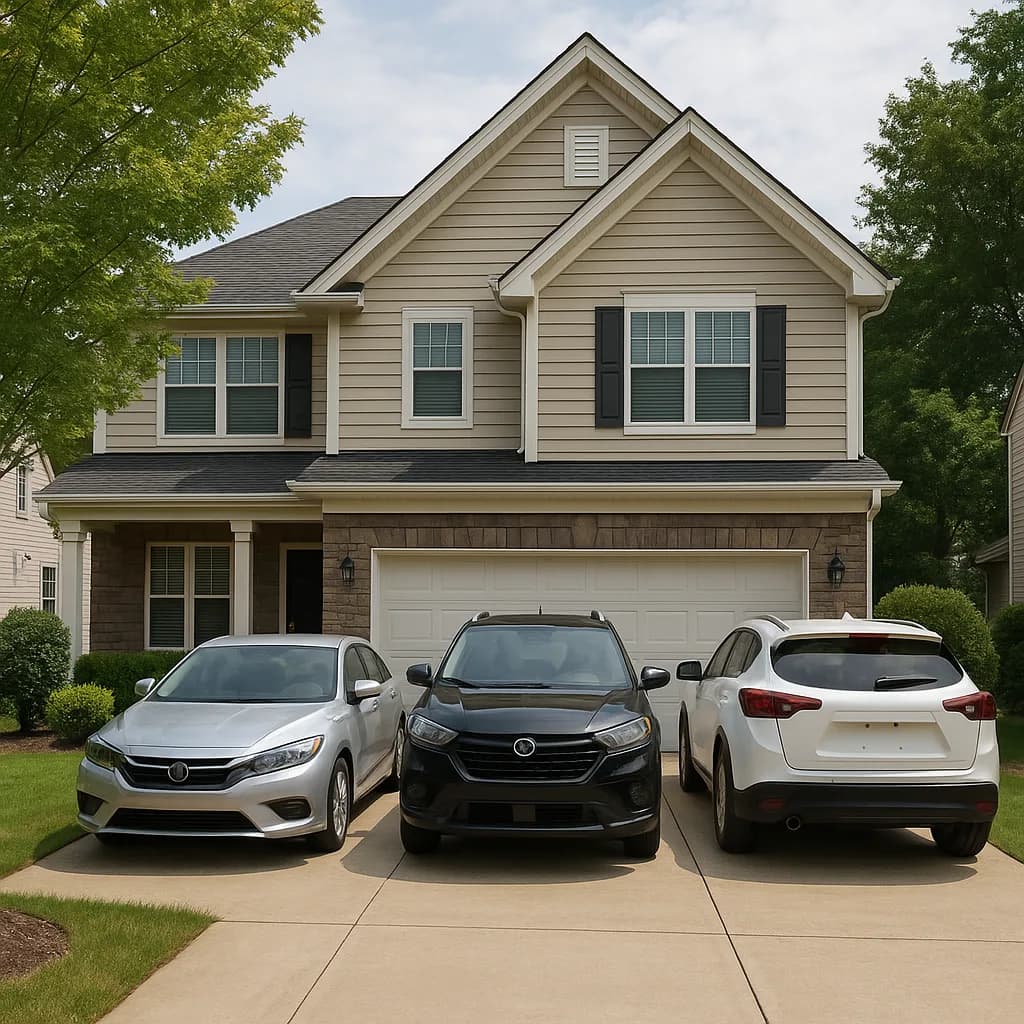
Most carriers require every vehicle to sit on the same policy and share a garaging address. A car titled to your spouse qualifies. A car titled to your adult child living at a different address does not. The discount applies per policy, not per household. If you own three cars but one sits on a separate policy, you lose the multi-car discount on that vehicle. Some carriers extend the discount to every vehicle on the policy. Others cap it at two or three cars. A household with four vehicles pays a different effective rate depending on whether the carrier caps the discount or extends it across all four.
Carriers also differ on how they apply the discount when you add a vehicle mid-term. Some re-rate the entire policy and apply the discount retroactively to the policy start date. Others apply it only from the date you added the second vehicle forward. That timing difference changes the total premium you pay over the policy term. When you compare carriers, ask whether the multi-car discount applies immediately or only at renewal, and whether it extends to every vehicle or caps at a set number.
Related Articles





The Garaging-Address Rule and When It Blocks the Discount
Arizona carriers tie the multi-car discount to the garaging address. Every vehicle on the policy must be garaged at the same address overnight. A car you park at work during the day still qualifies. A car your college-age child drives at school in another city does not. The carrier prices that vehicle as if it were garaged at the school address, and the multi-car discount does not apply.
This rule creates a structural problem for households with vehicles split across two addresses. You own two cars. One is garaged at your primary residence. The other is garaged at a vacation property you visit seasonally. The carrier treats them as separate garaging addresses and denies the multi-car discount. You pay two single-car premiums instead of one discounted multi-car rate. Some carriers allow a secondary garaging address if you can prove the vehicle returns to the primary address regularly. Most do not.
The garaging-address rule also applies when you add a vehicle titled to someone outside your household. Your adult child moves back home and brings a car titled in their name. The carrier will add the vehicle to your policy only if your child lives at your address full-time and the car is garaged there overnight. If your child keeps an apartment elsewhere, the carrier treats the vehicle as garaged at the apartment and denies the multi-car discount. The vehicle can sit on your policy, but you pay the single-car rate for it.
Arizona Auto Insurance Carriers
37 carriers
Thirty-seven carriers write personal auto insurance policies in Arizona. Not all write multi-car policies, and not all extend the multi-car discount past three vehicles. Compare carriers that write your household's vehicle count and coverage needs, not just the carrier that writes the lowest single-car rate.
Arizona Department of Insurance and Financial Institutions
Which Arizona Carriers Write the Lowest Multi-Car Rates
State Farm, GEICO, Progressive, Allstate, and Farmers write the majority of multi-car policies in Arizona. Each structures the multi-car discount differently. State Farm and GEICO extend the discount to every vehicle on the policy with no cap. Progressive and Allstate cap the discount at three vehicles. Farmers applies a tiered discount that increases with each vehicle added, up to four cars. A household with two vehicles sees one lowest-cost carrier. A household with five vehicles sees a different one.
Non-standard carriers—Acceptance, Bristol West, Dairyland, GAINSCO, Infinity, Kemper, The General—write multi-car policies for households with high-risk drivers or prior violations. These carriers apply the multi-car discount, but their base rates start higher than standard-tier carriers. A household with one high-risk driver and two vehicles may pay less with a non-standard carrier that extends the multi-car discount than with a standard carrier that denies coverage to the high-risk driver and forces a separate policy.
Compare Carriers on Combined Premium, Not Per-Vehicle Rate
Request quotes from at least three carriers. Provide the same coverage limits, the same garaging address, and the same household driver list to each. Compare the total combined premium for all vehicles on one policy, not the per-vehicle rate. The per-vehicle figure misleads. The combined premium is the number you pay.
When you compare quotes, confirm that every vehicle qualifies for the multi-car discount under that carrier's rules. Ask whether the discount applies immediately or only at renewal. Ask whether the discount extends to every vehicle or caps at a set number. Ask whether the carrier requires all vehicles to share a garaging address or allows a secondary address. These structural differences determine which carrier writes the lowest combined premium for your household. The advertised rate is not the rate you pay once you add the second and third vehicle.